- 26th October, 2026
- By Clair Turner
The Delivery Illusion: When Your Team is Not Hearing Your Words

Communication is not a parcel you send and someone else receives. Communication is an act built by two people at the same time.
Dean Barnlund, a renowned communication researcher and creator of the Transactional Communication Model, worked this out decades ago. While you are speaking, the other person is already filtering what you say through their own thoughts, perhaps fear for their job, their history with you, and possibly through an experience with their previous manager.
I call this the Delivery Illusion. Believing that because the message was clear leaving you, it arrived the same way.
Example of the Delivery Illusion
Here is what that looks like in organisational practice. A general manager tells her leadership team that an upcoming restructure was about efficiency, not about reducing headcount. Two weeks later, half of them were quietly applying for other jobs.
How did this happen? She had been clear.
But she was also the only person in the room who knew precisely what she meant.
For those who were listening, someone was probably three weeks from a mortgage settlement; another was made redundant in the last restructure. These team members filtered her words through their own experience when a leader said 'efficiency'.
However, neither person has done anything incorrectly.
The Delivery Illusion and Communication Gap
A communication gap is the distance between what you meant and what the other person understood. In traditional communication models, you have a sender, receiver, the channel through which the message and feedback pass, and the act of encoding and decoding the message.
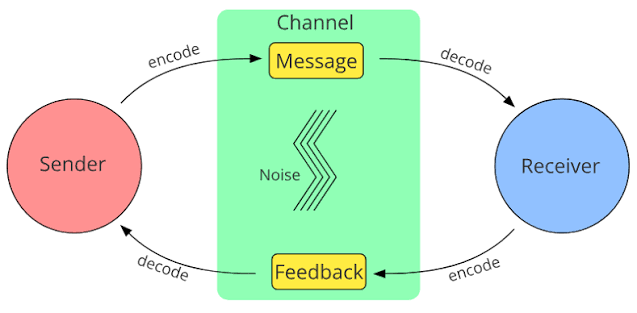
The Delivery Illusion is an example of a communication gap that exists in the decoding phase of the model. It is not a failure of wording, and it is not inattention. The gap is created when your meaning passes through someone else's filters and arrives as something else.
What do we do about a communication gap we cannot see?
If you're experiencing Delivery Illusion, don't ask teams "Does that make sense?" People are excellent at nodding without fully understanding your words. The question gives them an easy exit and gives you nothing.
Ask instead what they understood you to mean, in their own words. It is the fastest diagnostic you have, because the communication gap can be identified in the first sentence they say back to you. Ask these clarifying questions instead:
"What will you tell your team about this tomorrow?"
"How would you explain this to someone who missed the meeting?"
"What does this change for your area specifically?"
"What are you going to do differently on Monday?"
And watch the room while you are still talking. Notice the hesitation and half-nods that could indicate your message is getting lost in the Delivery Illusion. Effective leaders address these communication gaps in the moment, before words turn into action.
Where the communication gap costs leaders
Over time, the Delivery Illusion causes misalignment, role confusion, and underperformance. The cost is hard to see because it does not present as a communication problem. It presents as a performance problem, or a trust problem, or a team that has quietly stopped bringing things to you.
By the time it reaches leaders in that form, the gap has turned into something costlier to fix.
Twenty years working with leadership teams across corporate and government has shown me exactly how to identify this communication gap. It is often difficult to identify the Delivery Illusion oneself, and an expert outside perspective is usually needed.
If you want to find your communication gap and reduce the Delivery Illusion at your workplace, that is the work I do. Get in touch, and we can look at it together.